Why Your Anxiety Feels Worse During Tough News Cycles
It’s not just your imagination. When the news gets tough and fills our social media feeds, anxiety gets louder.
There’s plenty of research to back this up.
A 2022 study looked at the impact of daily exposure of Covid-19 news on university students. The study found that increased anxiety related to the pandemic was associated with increased general worry.
An earlier Covid-19 study completed in 2020 showed that exposure to the media caused vicarious traumatization (trauma responses to incidents that did not happen to you or a close person in your life), which was then associated with higher anxiety.
A 2013 study explored psychological stress in those directly impacted by the Boston Marathon Bombings as well as those who weren’t there but were repeatedly exposed to news about the event. Alarmingly, this study found that repeated media exposure was actually associated with higher acute stress than direct exposure to the event.
In 2022, the American Psychological Association (APA) released an article stating that psychologists were seeing an increase in news-related stress. In this article, a psychologist (Dr. Don Grant) describes the term “media saturation overload",” which refers to the psychological distress, mental exhaustion, and anxiety that’s caused by too much consumption of overly negative news. Dr. Grant also highlights how the parade of emotionally draining headlines hasn’t slowed down in many years, from the pandemic, the #MeToo movement, Black Lives Matter, ICE in the US, Roe V. Wade, disagreements with the government about Indigenous lands, wars, consumerism, billionaires, political campaigns, and transphobia, to name a few.
If media-consumption makes us more anxious, why are we so compelled to consume media?
That’s a great question. Lately, the news has been nothing but a laundry list of horrible things happening all over the world. And with most people getting their news from social media, we could very easily just put our phone down. So why don’t we?
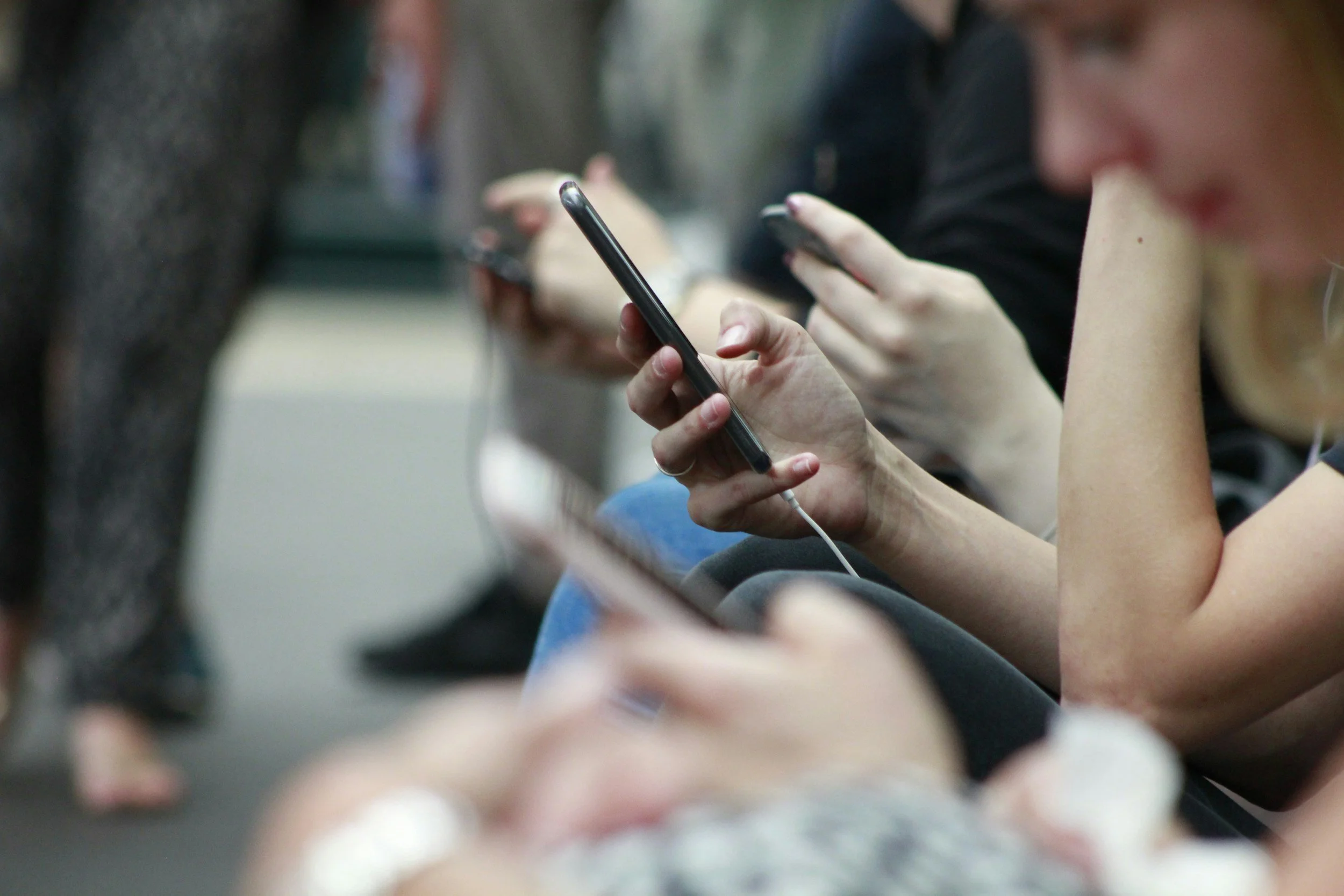
In a 2025 study looking at media-induced uncertainty, the authors describe a vicious cycle where media consumption leads to an increase in psychological distress, which then leads to increased media consumption. The authors hypothesized that media consumption can initially act as a coping strategy to handle to stress of these difficult and traumatic events - we’re confused, scared, and hopeless, and educating ourselves about the event feels like the solution. Our brain says “we need to learn about this before we decide what to do about it.”
Social media makes this cycle stronger. Algorithms pick up your interest in Donald Trump and flood your content with American politics. You find yourself doomscrolling through an endless tunnel of worry and despair. You read comments to see what others have to say about the topic. You follow pages that are dedicated to teaching you about the problem. You spend all of your “unwinding” time trying to learn about the newest tragedy.
And media headlines are compelling. Headlines are designed to catch your attention and pull at your emotions. The goal, whether through traditional media like a news paper or TV station, or through social media, is to pique and hold your interest. The more clicks, the more a company can charge for advertising. The goal is to go viral.
(I mean, even this blog is designed to capitalize on our obsession with the media - this idea wasn’t random, it came to me in response to all of the heavy news in my own social media feed).
But this next piece is important:
We’re not sucked in because we’re weak. We’re sucked in because these headlines and reels are connecting with our fears and values, and our brains are literally wired to seek information when faced with uncertainty.
You want to do what’s right. You value equity and social justice. You’re scared for your safety. You’re concerned about where the future will take us. You care about the pain of other people. You want to be an ally. You want to be prepared. You’re searching for predictability in a world of uncertainty.
Your brain says “keep digging, we’ll find the answer.”
So you keep scrolling. You listen to content creators explain political situations. You read carousels about police reform and microaggressions. You do your best to get informed.
Before you know it, the next thing has happened, and the media has shifted.
You’re trying to keep up and be a good person.
The real question: how does this increase general worries, unrelated to the media?
I did a quick search of the literature available on this topic, and, I’m going to be honest with you, I couldn’t find a clear answer. But I did find some helpful information to piece together and summarize current theories about why this happens.
Heightened cortisol - the stress hormone
When we experience stress, the hormone cortisol gets released to activate our stress response. This response is key in an actual emergency, like if a bear were to start chasing you on a hike. But it’s not particularly helpful when you’re sitting at home on TikTok. When cortisol stays elevated - such as with daily doomscrolling of stressful and/or traumatic events - the body starts acting like danger is always present. The brain says, “we better keep an eye out for the threat.” Suddenly, everything can feel like a threat. Dr. Adam S. Anderson elaborates further in a 2024 podcast from the Mayo Clinic Press.
On the flip side, a 2012 study found that prolonged exposure to the media was not associated with a cortisol increase, which, according to the authors, was in line with a previous study. The authors referenced a 1998 study which demonstrated that when exposed to the same stressful event, rodents had a decreased cortisol response. However, if the rodent was then exposed to a new stressor, their stress response was enhanced. They hypothesized that since we are exposed to disturbing news headlines on a daily basis, we may have become desensitized to that particular kind of stressor, but when faced with different stressor, like an embarrassing social encounter, the stress response might come back stronger.
Thoughts, feelings, physiological reactions, and behaviours are all connected
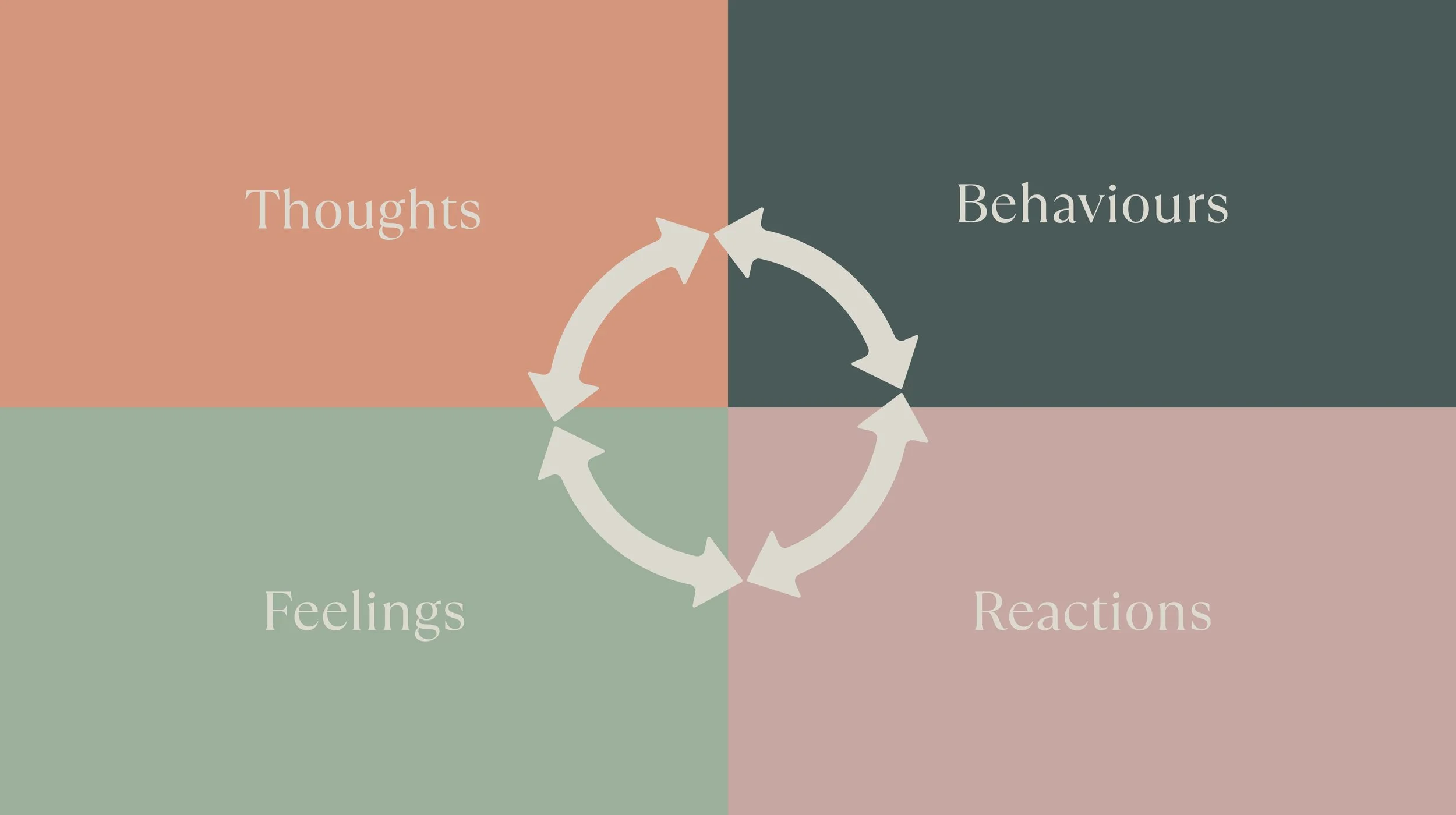
What’s going on in our mind and our body is connected. Our thoughts, feelings, physical sensations, and behaviours all influence each other. In other words, an increased heart rate (physiological reaction) can be misinterpreted by the brain as a sign of threat, causing a feeling of worry and thoughts like, “something is wrong.” If you happen to be chatting with a coworker when this happens, it may prompt you to ask, “Are you mad at me?” as your brain tries to identify the sensed threat.
The same thing can happen when we consume stressful news. Disturbing content can leave you feeling “on edge.” In turn, this puts your brain on high alert as it scans your environment for threats. A slight change in tone from your partner and your brain says, “I must have said something wrong.” The texture of the chicken at dinnertime seems different, and your brain says, “It’s undercooked, and you’re going to get food poisoning.”
The reminder that bad things really do happen
Seeing bad things happening every single day teaches our brain that bad things really do happen, and it makes it seem like the likelihood of these things happening is much higher than reality. This is especially true if you see these bad things happening to people like you. In these cases, it becomes personal and more likely that it could happen to you. It becomes even more important for the brain the scan the environment, and proactively consider potential threats.
How can you prevent this from happening?
What a wonderful question, I’m so glad you asked! Here are a few ways you can manage the anxiety caused by troubling headlines.
Limit your exposure to the media
I get it. You want to know what’s going on. It’s important to you to stay informed. But there comes a time when we need to ask ourselves if consuming more media is helping us or just making us feel miserable. The goal should be to feel educated and empowered, not hopeless and distressed. We want to know enough to help us understand the issue and figure out how to be part of the solution, but not so much that we feel stuck, powerless, and stressed.
Act based on your values, not your fears
Media that pulls at our values can be particularly distressing. For example, if you value equity and social justice, you may be particularly disturbed by news depicting social injustices and systemic oppression. Rather than continuing to watch as much content about the issue as you can, find ways to connect to the part of you that values equity and social justice. Donate to a charity, participate in a protest, read about candidates’ political views before voting, call out injustices when you see them, write to your politicians, sign petitions, volunteer - find ways to contribute to the solution, one small step at a time.
Follow accounts that share “feel-good” news
There are a lot of horrible things happening around the world, but there are also so many good things! Knowing the good is just as important. Our brains are wired to catch negativity - from a survival perspective, it’s way more important to remember a negative experience than it is to remember a positive one. Make sure your brain has plenty of positive news to keep your perspective on things balanced.
Notice when you’re overthinking or spiralling, and bring yourself back to the present moment
You may catch yourself going down the rabbit hole of “what ifs” as your brain gets flooded with negative stories. “What if things get worse?” “What if I’m not doing enough?” “What if this happens to me or someone I love?” When you notice these kinds of thoughts, name it (“I’m having the thought that I might not be doing enough”), and go back to what you were doing before the thought came up. Not all thoughts are helpful - some just drag us into an overthinking quicksand.
Read more about overthinking here.
It’s easy to feel overwhelmed when the world is burning.
At the end of the day, make sure you give yourself some grace. It’s understandable to feel overwhelmed, stressed, or anxious when everything is falling apart in the world.
You don’t need to carry the weight of the world in your nervous system to care deeply about it. Staying informed matters—but so does staying well. Anxiety isn’t a personal failing here; it’s a very human response to a world that feels loud, urgent, and uncertain. You’re allowed to step back, breathe, and choose a relationship with the news that protects your mental health.