The Overthinking Trap: Why Seeking Certainty Fuels Anxiety
Picture this: You’ve been at your current job for a few years, but it’s starting to feel like it’s time for a change. You’ve spent weeks, perhaps even months, analyzing how you feel and trying to decide whether a new job is the answer, or something else. You’ve been browsing job opportunities on your phone at night, while the Office plays in the background, but you haven’t applied for anything. For starters, you can’t decide what kind of job you want, and it never feels like your skills are really a match for anything.
You’ve considered every possible scenario - what if you hate the new job? What if they let you go during the probation period? What if you don’t get along with your co-workers? You’ve drafted countless “pro/con” lists, googled “how to decide if it’s time for a new job,” and have chewed your friends’ and family’s ears off.
You’re stuck.
You’ve been spinning your tires and not getting anywhere. No matter how hard you try to stop, anxiety tells you that if you spin your tires just a little longer, you might finally find enough friction to free yourself.
Sound familiar?
You’re not alone. One of the most common concerns I hear in a consultation is “I overthink everything.” Research by Susan Nolen-Hoeksema found that over 70% of young adults overthink. So, yeah, it’s pretty common!
Overthinking is an incredibly frustrating manifestation of anxiety. It leaves people stuck and spiralling, as they dig themselves deeper and deeper into a hole.
Why do we do this?
Simply put, our brain perceives uncertainty as a threat.
With a background in biology, I like to think of it this way: our ancestors way back needed to be very cautious. A small mistake, like eating a berry that looked like a raspberry but was actually poisonous, could cost you your life. It wasn’t enough to be somewhat sure; you needed to be absolutely certain. People who were more careful and chose not to eat the fruit if they weren’t 110% sure were more likely to live and pass on those genes. Certainty kept us alive.

Knowing what’s safe to eat is an essential skill for animals (if they want to survive, that is).
In many ways, certainty still keeps us alive. Like when we throw out food because it smelled a little funky and we didn’t want to “chance it.”
Certainty signals to our brain that we are safe. For this reason, the brain craves predictability. Our brain wants to know what to expect at every turn in life. When things are unpredictable and uncertain, our brain sees this as a potential danger and sounds the alarm. We experience distress, anxiety, and discomfort, and our brain tells us that we need to “figure it out” or avoid it entirely. Moving forward despite uncertainty is not an option that our brain is willing to entertain. Overthinking is how our brain tries to “figure it out.”
Neurodivergent nervous systems often place a higher value on predictability and structure.
If you’re neurodivergent, evidence shows that your brain’s need for certainty and clarity might be stronger than a neurotypical brain. This post won’t go into depth about certainty and the neurodivergent brain (perhaps a future post!), but it’s important to mention because, as you read through this blog, you may find it particularly challenging to imagine moving forward on choices in your life without certainty.
Overthinking feels helpful, but it’s costing you.
Let’s think about my 13-year-old computer for a second (yes, I know, an ancient artifact ✨). The memory is full - I keep getting notifications to clear disk space; so when I try to do things like write this blog, my laptop overheats, the fan turns on, and it becomes very slow. I have to wait a beat or two when toggling between tabs, and sometimes it completely freezes on me.

Relax, my computer’s not this old.
This may not have been the best comparison, but I hope you’re seeing my point. Overthinking uses up valuable energy. As a result, we have less energy available for things like school assignments, work tasks, or social gatherings with friends. There are just too many tabs open.
Emotionally, overthinking can bring us deeper into our anxiety and depression. It can lead to feelings of guilt and shame, as we blame or criticize ourselves. It can tap into our perfectionistic side, convincing us that mistakes will most likely have detrimental impacts. It exhausts us by constantly running in the background.
Behaviourally, overthinking often causes us to miss opportunities by keeping us stuck. We don’t apply for the job because we couldn’t decide if it was the right fit before the posting closed. We never reach out to the new person we just met because we don’t know if they actually like us. We don’t travel abroad because we can’t stop thinking of all the things that can potentially go wrong.
Being “sure” is often next to impossible.
Our brain wants us to be sure because certainty = safety. But in many cases, it’s impossible to be 100% sure. We can try as hard as we can, but our brain will find a spot of doubt and drag us deeper into the overthinking trap. For example, we can never know if a decision we made was the “right” or the “best” decision - not unless we’re able to compare parallel universes that split at the moment of the decision. There’s really no way to know for sure if things would have been better had you made a different choice.
Life is inherently uncertain. We can plan and plan and plan and plan, and still run into unexpected situations. No amount of planning - or thinking - can ever eliminate uncertainty.
The best solution we have is to become comfortable with discomfort.
If uncertainty brings discomfort (anxiety, overwhelm, indecision, etc.), and life is inherently uncertain, then life is also inherently uncomfortable. We can’t be comfortable all the time. We can’t avoid difficult emotions like anxiety or embarrassment. Our best defence against overthinking is accepting that we can never be 100% sure, and building our tolerance for discomfort.
You don’t need to be sure before you take the next steps.
I know it feels that way, but promise me, you don’t need to be sure to take the next steps. You don’t need to be 100% sure that you want the job before you apply. You don’t need to be 100% sure that something is wrong before you see the doctor. You don’t need to be 100% sure that geology is the right major for you before you start university.
So, how do I get out of the overthinking trap?
Ah, yes. The meat of this blog’s sandwich. Let’s dive in.
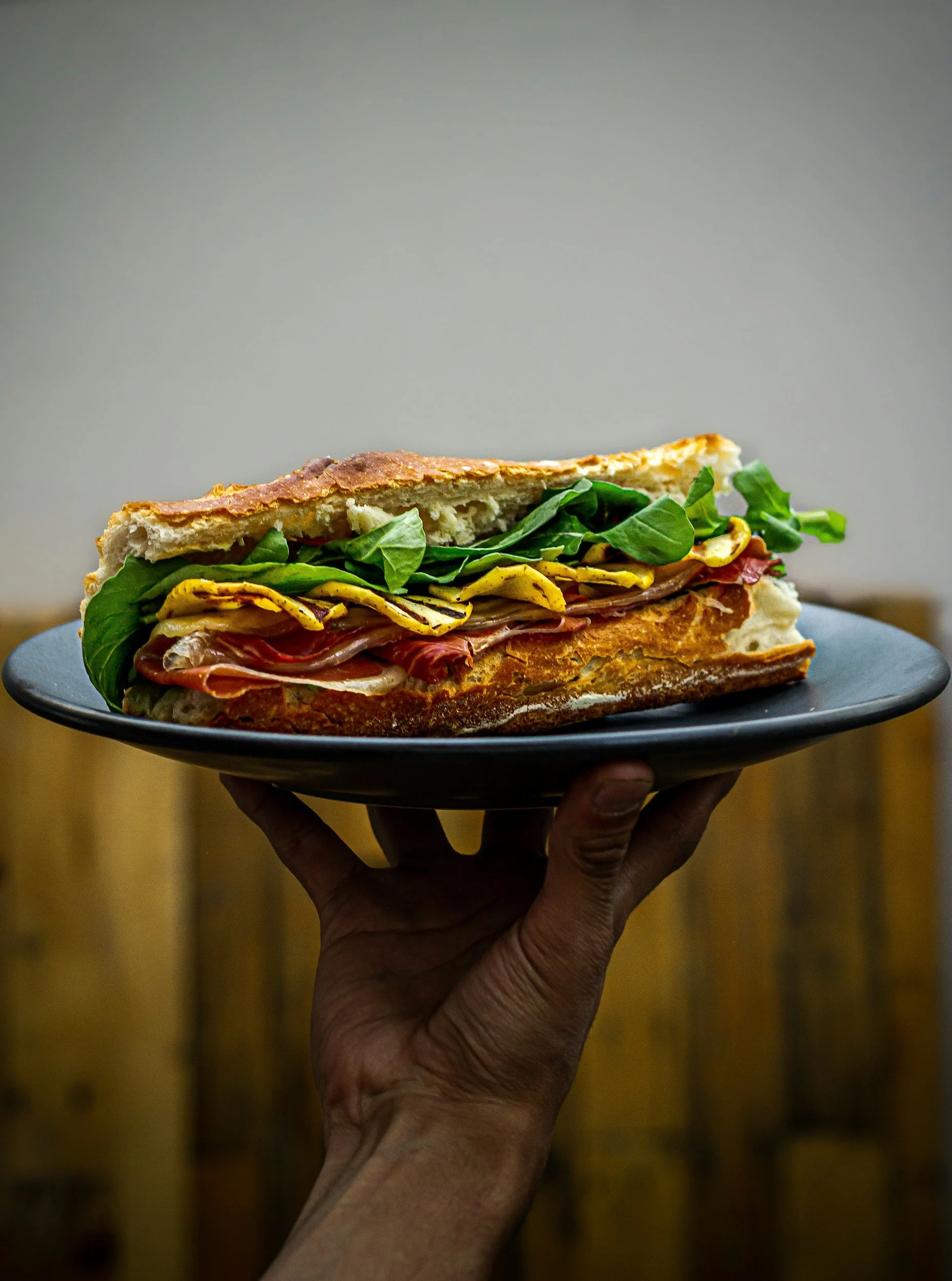
Oh great, now we’re thinking about food… 🤤
Notice when you’re overthinking.
This first step is the most important. We can’t get out of the trap if we don’t realize we’re trapped. When you catch yourself overthinking, name it, and move on with your day. Maybe you’re watching TV, and you catch yourself wondering if your coworker thought you were weird today when you said that thing - name it and return to your TV: “I’m wondering whether my coworker thinks I’m weird now, a question I cannot answer.”
This isn’t a magic trick - you won’t magically stop ruminating or overthinking because you managed to catch it and name it. You will likely need to do this repeatedly as you teach your brain that you’re not interested in engaging with these kinds of thoughts. Your brain will try to fight back because it wants you to overthink - it genuinely believes that if you think hard enough, you’ll find an answer. But you know that you won’t, and you choose not to engage. If we do this enough, the brain will eventually learn that these thoughts are not important.
Focus on your values: “Does this move me towards the life I want?”
When we act according to our values rather than letting anxiety run the show, we make our lives richer. While overthinking looks for a guarantee, when we act based on values, we look for alignment. You don’t need to be 100% sure of the outcome to choose courage, honesty, or connection. For example, overthinking might tell you that social events are scary and should be avoided, but if you value connection, you might choose to go anyway, even if going is scary and uncomfortable.
Ask yourself: “Is there a clear next step?”
Sometimes we really are problem-solving. The hardest part of overthinking for many people is not knowing whether you’re overthinking or engaging in productive problem-solving.
Read that again.
The hardest part of overthinking for many people is not knowing whether you’re overthinking or engaging in productive problem-solving.
Oh, hey uncertainty! Fancy seeing you here!
You don’t need to know for sure whether you’re overthinking or moving towards a solution. It’s very meta, but sometimes we overthink whether we’re overthinking 🤪 If you can’t identify a clear next step, you might be overthinking - notice it, and return to what you were doing. If you can identify a next step, that’s a sign that you might be problem-solving. There’s no magic formula to determine whether your thinking is helpful or unhelpful.
Set rumination time-limits.
If thinking and rumination are part of your processing, give yourself clear boundaries to avoid getting sucked into the overthinking trap. This can look like allowing yourself to sit with your thoughts for 10 minutes and see where they take you. No judgment, just letting the thoughts do their thing. When time is up, you thank your brain for the lovely thoughts, take any solutions or insights that came out of it, leave the rest, and return to your life.
Remind yourself that the goal is not perfect clarity; the goal is forward movement.
You don’t need full confidence before taking the next step or making a decision. You don’t need to know if it’s the “right” choice. You’re allowed to be wrong sometimes or change your mind. It is possible to move forward without perfect clarity. Instead of asking yourself, “Am I 100% sure about this?” try asking yourself, “Does this seem like a reasonable next step?”
But how do I know if it’s a reasonable next step?
See how easy it is to come back into that need for certainty? You don’t need to know for sure whether it’s a reasonable next step.
Catching yourself overthinking is important, but there are other ways to increase our tolerance for uncertainty.
There are ways to build our tolerance for uncertainty outside of challenges with overthinking. Here are a few:
Exposure to uncertain situations.
Slowly expose yourself to situations that feel uncertain or unpredictable. Allow yourself to experience the anxiety and discomfort that come with not knowing what to expect. Don’t try to fix the discomfort by avoiding the situation or ruminating. Start small, with situations that cause low levels of anxiety and discomfort, and slowly move up to more anxiety-provoking situations.
Separate discomfort from danger.
When you notice anxiety and discomfort showing up, remind yourself that discomfort is normal and not a sign of danger. Tell yourself something like, “I’m feeling uncomfortable, but this doesn’t mean there is danger, and I don’t need to do anything about it.”
Exposure to discomfort.
You know, psychological discomfort isn’t the only kind of discomfort. Eat a sour candy, like a Warhead. Sit in a sauna or try a cold plunge (or a cold shower). Wear something uncomfortable (make sure you have a change of clothes on hand!). Eat a food you don’t like. Step into small, uncomfortable situations and build trust in your ability to cope; prove to yourself that it doesn’t have to stop you.

More food… 🤤
This blog post on Thinking Traps can also be a great resource for overthinking!
Final thoughts: learning to move without certainty.
It’s normal for our brains to crave certainty; it kept us safe and alive for thousands of years, and in many ways, continues to do so today. But when our need for certainty leads to overthinking and rumination, it can become unhelpful and harmful, draining our precious energy, and leading us down a rabbit hole to nowhere.
With practice and intention, we can teach our brains to know the difference between needing to know for sure whether an unknown berry will kill you and needing to know for sure whether geology is the right major for you. The stakes are not the same, so we should not treat both situations with the same fear of uncertainty. It’s okay to choose the wrong major; it’s not okay to eat a deadly poisonous berry.
Practice makes progress. The more you practice catching overthinking and tolerating uncertainty, the better you will get at pulling yourself out of the overthinking trap.
Therapy can help.
Overthinking doesn’t have to run your life. If you’re ready to take the first step toward more confidence, clarity, and action, book a free consultation. Let’s see how I can help you move forward!